Deep Groove Ball Bearings in Reducer Design: Load Capacity, Clearance Matching, and Procurement Guidance
Deep groove ball bearings are widely used for input and output shaft support in small to medium-sized reducers. This guide explains radial versus axial load capacity, clearance selection trade-offs between temperature rise and noise, and three key confirmations before finalizing a bearing procurement specification.
In reducer design, bearing selection directly determines the operational quality of the entire assembly. Compared with tapered roller bearings or spherical roller bearings, deep groove ball bearings are widely used for input and output shaft support in small to medium-sized reducers due to their simple structure, low friction loss, and long maintenance intervals. However, many procurement specifications focus only on the basic dynamic load rating while overlooking the actual difference between radial and axial load capacity, as well as the cascading effects of clearance selection on temperature rise and noise. The result is overheating, abnormal sound, or premature field failure.
Radial and Axial Load Capacity of Deep Groove Ball Bearings
The groove geometry of a deep groove ball bearing defines its load characteristics: radial load is the primary function, axial load is secondary.
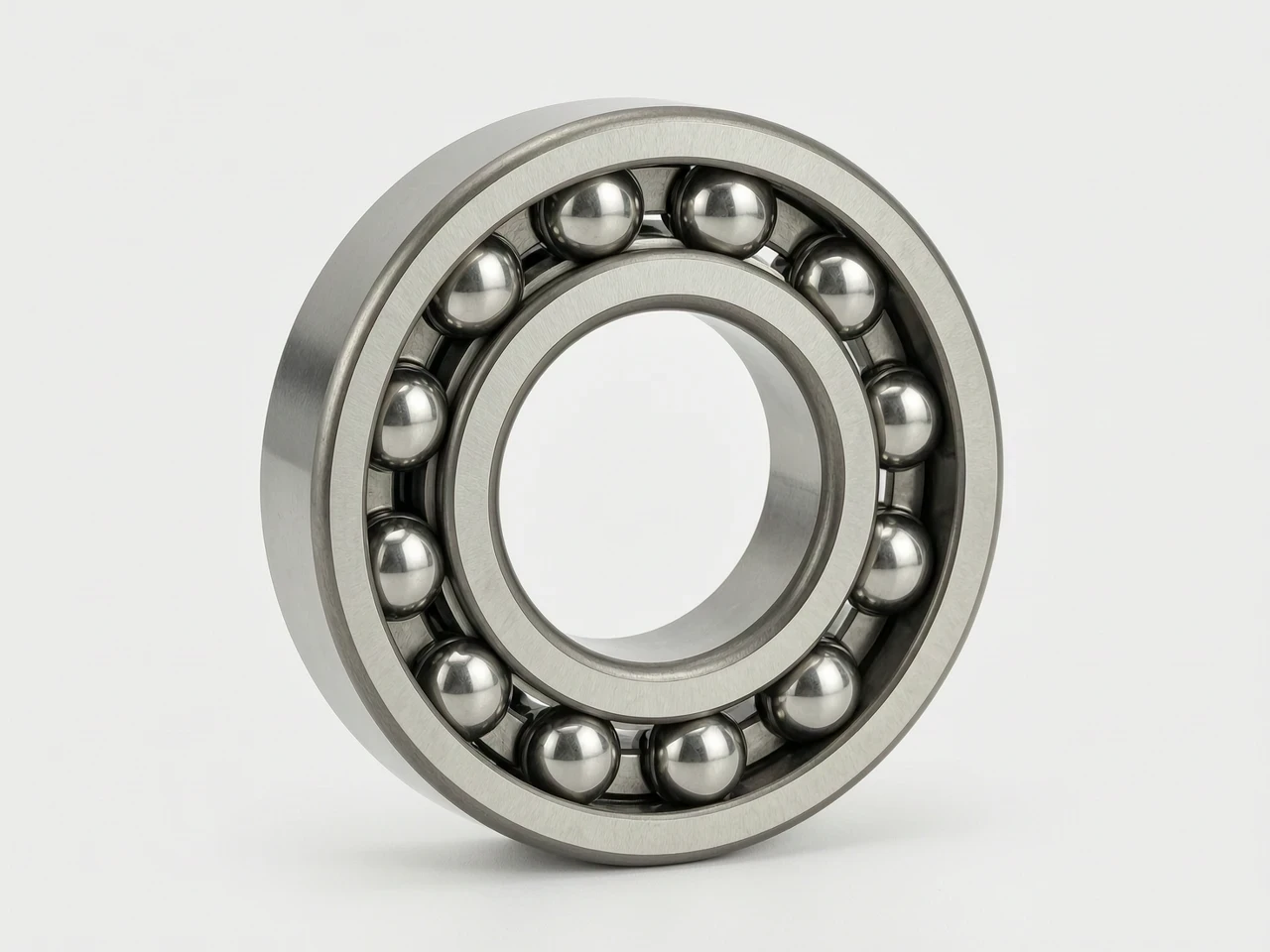
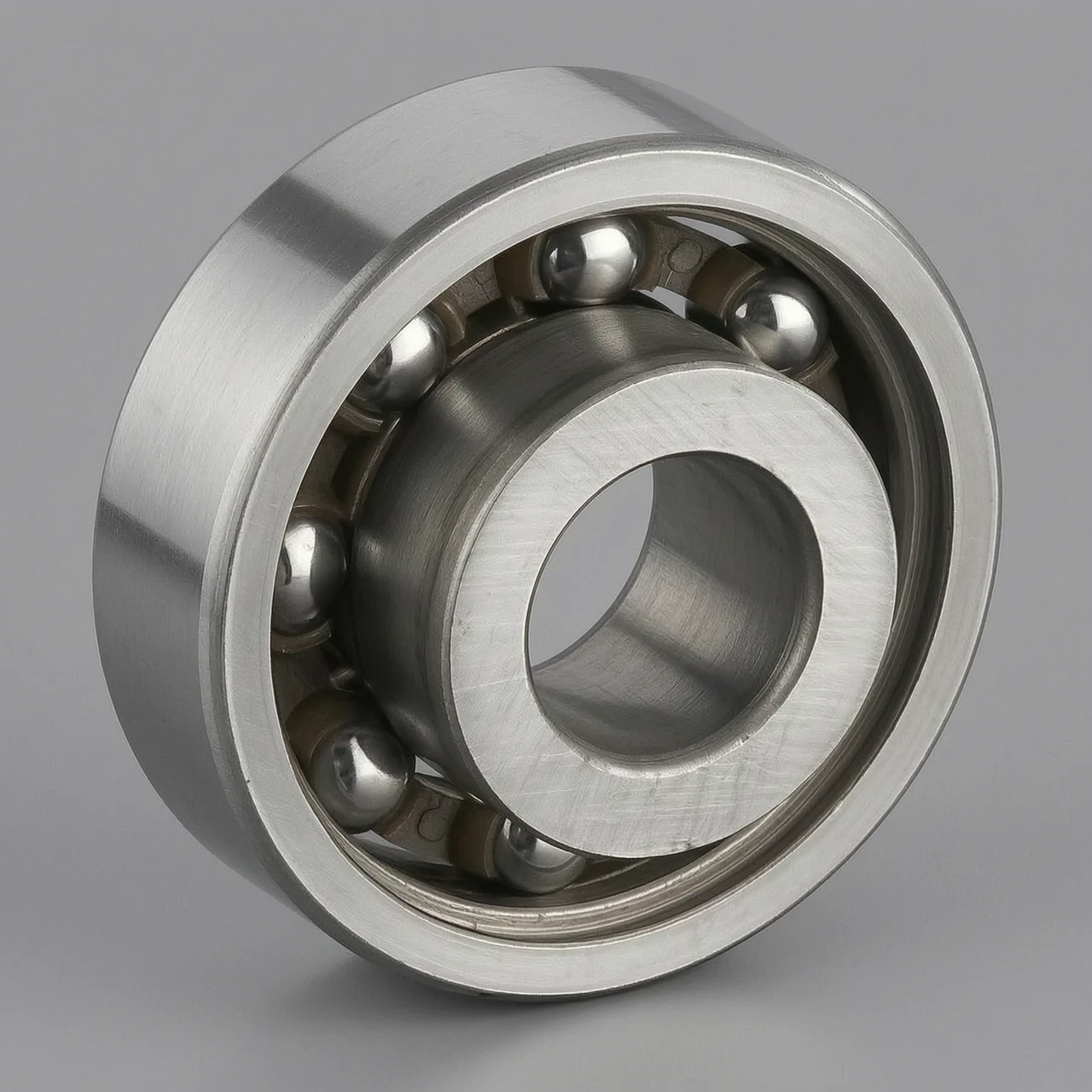
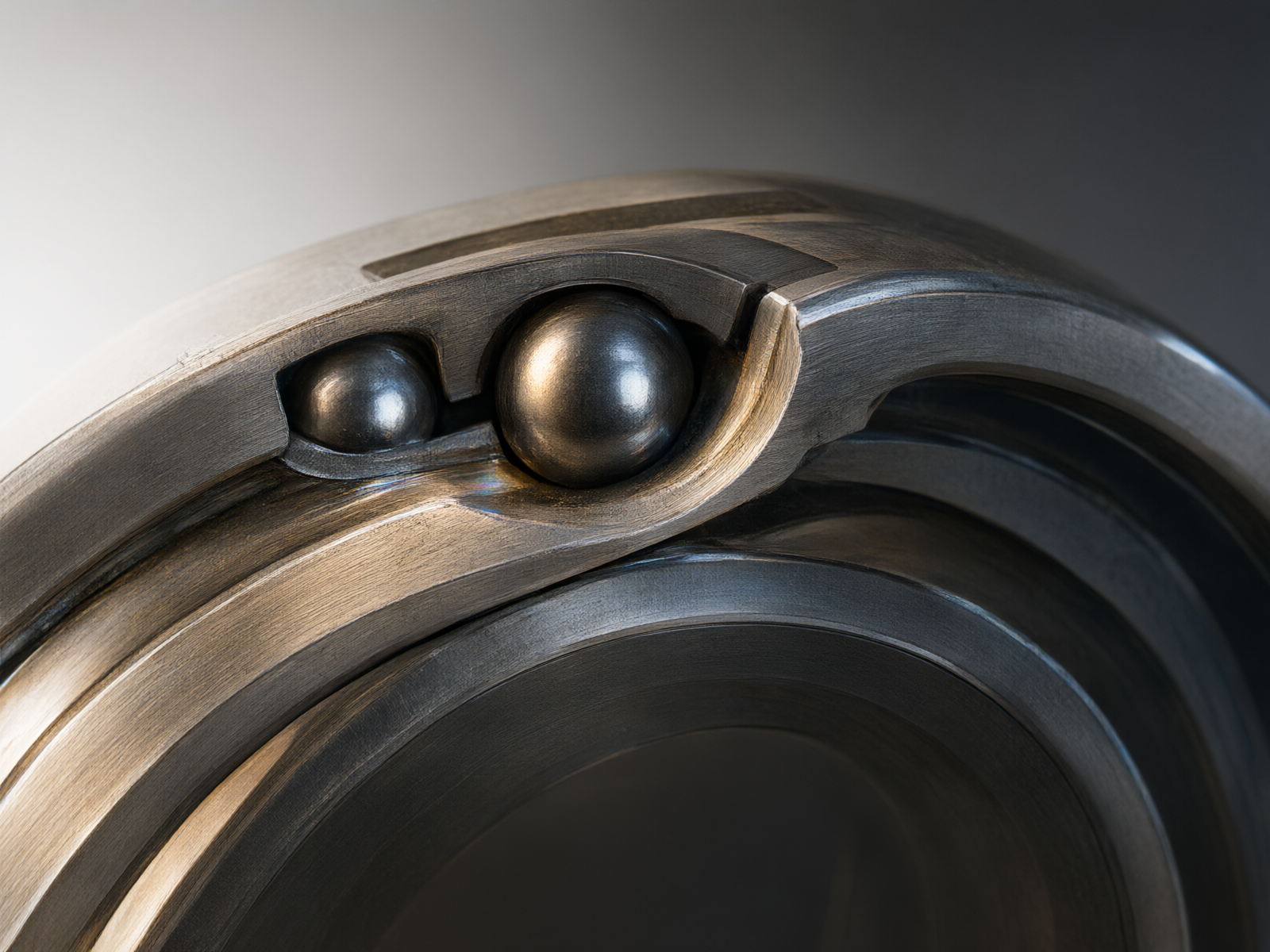
Structurally, the inner and outer ring raceways of a deep groove ball bearing are arc-shaped, and the steel balls make point contact with the raceways. Under radial load, force transmits uniformly along the ball normal direction to both sides of the raceway, delivering high load-carrying efficiency. Taking the 6206 deep groove ball bearing as an example, its basic dynamic load rating Cr is approximately 19.5 kN, sufficient to cover the radial force requirements of most small to medium reducer input shafts.
Axial load capacity, by contrast, is significantly limited. Due to the matching relationship between raceway curvature radius and ball diameter, the contact angle between steel ball and raceway under axial load is nearly zero. Axial load capacity depends primarily on the geometric constraint of the raceway on the balls. Engineering experience shows that the axial load a deep groove ball bearing can sustain typically does not exceed 10%–15% of its radial dynamic load rating. When a reducer generates substantial axial force during operation — such as the axial thrust produced by helical gear transmission — relying solely on deep groove ball bearings may fail to meet life expectancy requirements. A thrust bearing pairing or an angular contact bearing arrangement becomes necessary.
For procurement teams, clarifying the actual load direction and magnitude at each shaft position is the prerequisite for selecting the correct bearing type. If the axial load exceeds 15% of the radial load, the bearing configuration should be reassessed.
Clearance: The Overlooked Variable
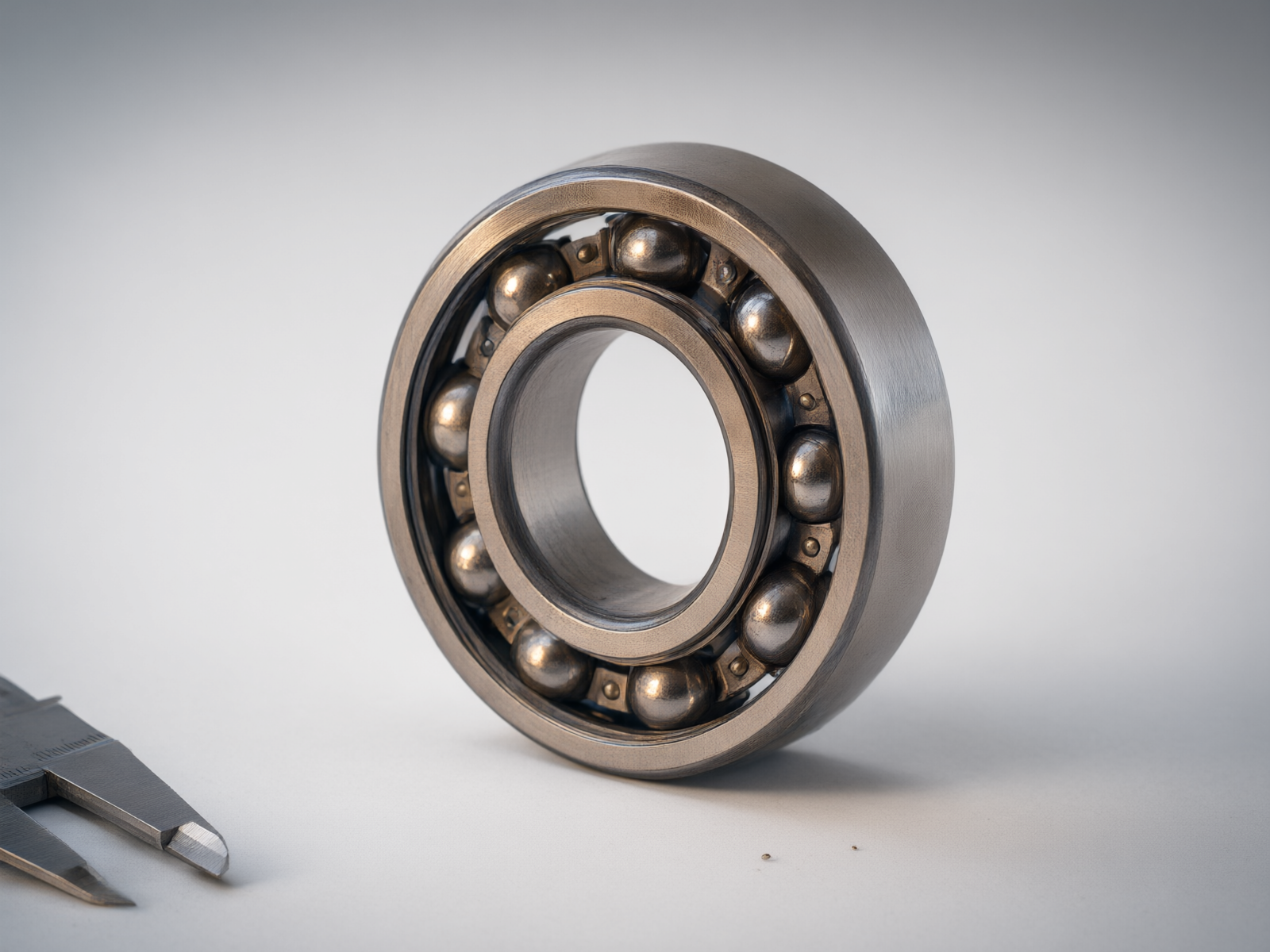
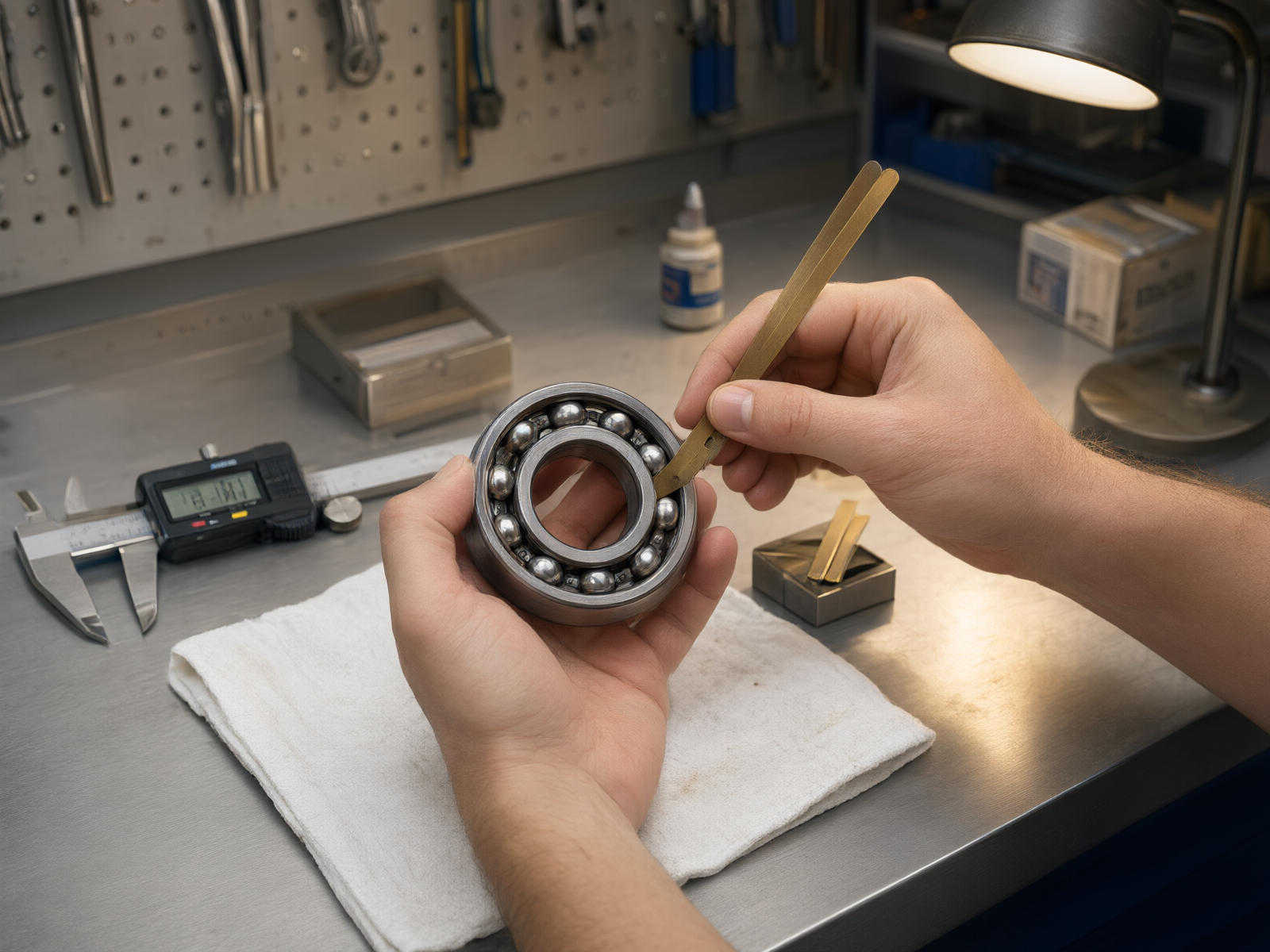
Bearing clearance refers to the allowable displacement between the inner and outer ring in the radial or axial direction. Deep groove ball bearing radial clearance is classified into standard groups: C2 (reduced), CN (standard), C3 (increased), C4, and C5 (extra-large). Clearance selection directly affects temperature rise and noise performance during reducer operation.
When clearance is too small, internal preload increases and contact stress between the steel balls and raceway rises. In the short term, this manifests as improved axial positioning accuracy and reduced operational vibration. But after a period of running, friction heat accumulates, inner ring temperature climbs, grease viscosity drops, oil film thickness thins, and wear accelerates. Field measurements show that under reducer operating conditions at 1,500 rpm, a C2 clearance bearing can run 8–12°C hotter than a C3 clearance bearing.
When clearance is too large, the situation tilts in the opposite direction. Steel ball freedom within the raceway increases, and the collision frequency between balls and cage rises during operation, resulting in higher noise levels. Under low-speed, heavy-load conditions, the noise value of an oversized-clearance bearing can be 3–6 dB(A) higher than that of standard clearance. Excessive clearance also reduces the bearing's equivalent dynamic load capacity and shortens service life.
Finding the Balance Between Temperature Rise and Noise
The core requirement a reducer places on its bearings is controllable temperature rise and compliant noise levels. These two metrics form a contradiction in clearance selection: small clearance favors noise reduction but raises temperature; large clearance favors heat dissipation but increases noise. Finding the balance requires matching clearance to the specific operating conditions.
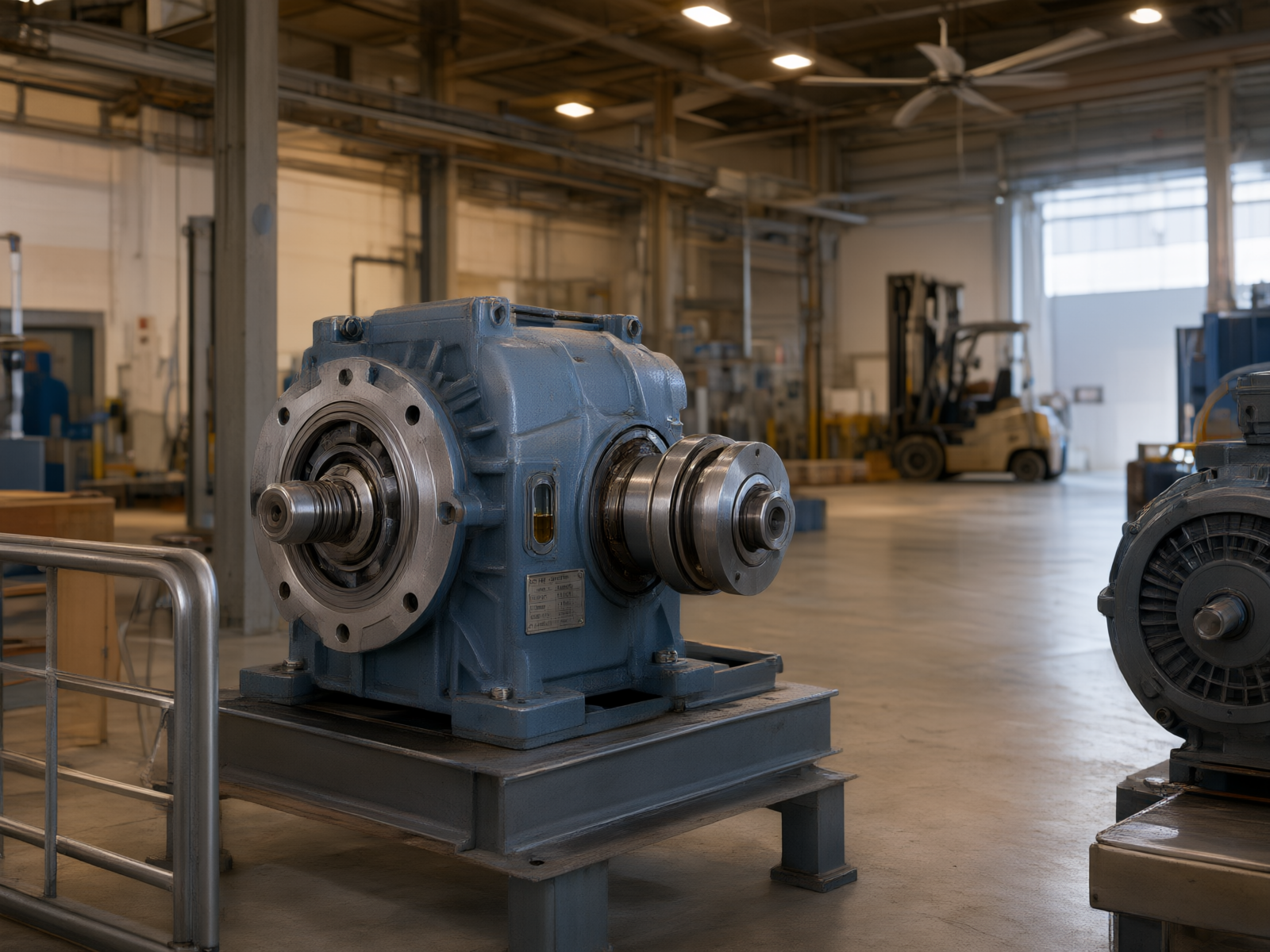
For continuously operating industrial reducers, a steady-state running temperature of 60–75°C is a common expectation. In this case, C3 clearance should be the priority, reserving sufficient thermal expansion compensation. When the inner ring uses an interference fit with the shaft, the radial compression from the fit surface further reduces the actual working clearance. The initial clearance of C3 is adequate to offset this loss.
For noise-sensitive applications — such as medical device drives or micro-reducers in office automation equipment — CN standard clearance under light-load conditions, paired with low-viscosity grease, can balance quiet operation with temperature control.
For heavy-load, low-speed applications with frequent impact loading — such as mining conveyor reducers or mixing equipment — C3 or C4 clearance provides a safer margin, prioritizing the bearing's operational headroom under thermal conditions.
Three Confirmations Before Finalizing a Procurement Specification
Before finalizing the bearing model in a procurement plan, we recommend confirming the following items one by one.
First, determine the radial load and axial load values and their directions at each shaft position. Assess whether a deep groove ball bearing is suitable or whether another bearing type must be paired.
Second, confirm the reducer's speed range and duty cycle. Continuous operation and intermittent operation impose different clearance demands. High-speed conditions are more sensitive to undersized clearance.
Third, confirm the fit method and lubrication conditions. Interference fit volume, grease type, and fill quantity all alter the bearing's actual working clearance. These factors must enter the calculation during selection.