Why Space-Constrained Equipment Uses Thin-Section Bearings
Thin-section bearings are often chosen when a machine's mounting envelope is the hard constraint. This guide explains how section thickness sets the installation boundary, the weight and inertia trade-offs, the stiffness and installation risks of thin walls, and a practical selection sequence.
When a machine's enclosure shrinks, engineers rarely start by redesigning the motor or transmission. They often first reconsider the bearing's mounting envelope. A bearing determines the shaft system's radial footprint, axial width, and assembly datum. Once these are fixed, little room remains to adjust the overall layout.
Thin-section bearings appear more often in selection tables not simply because they are "thin," but because their cross-sectional geometry can help address space constraints.
Section Thickness Sets the Installation Boundary
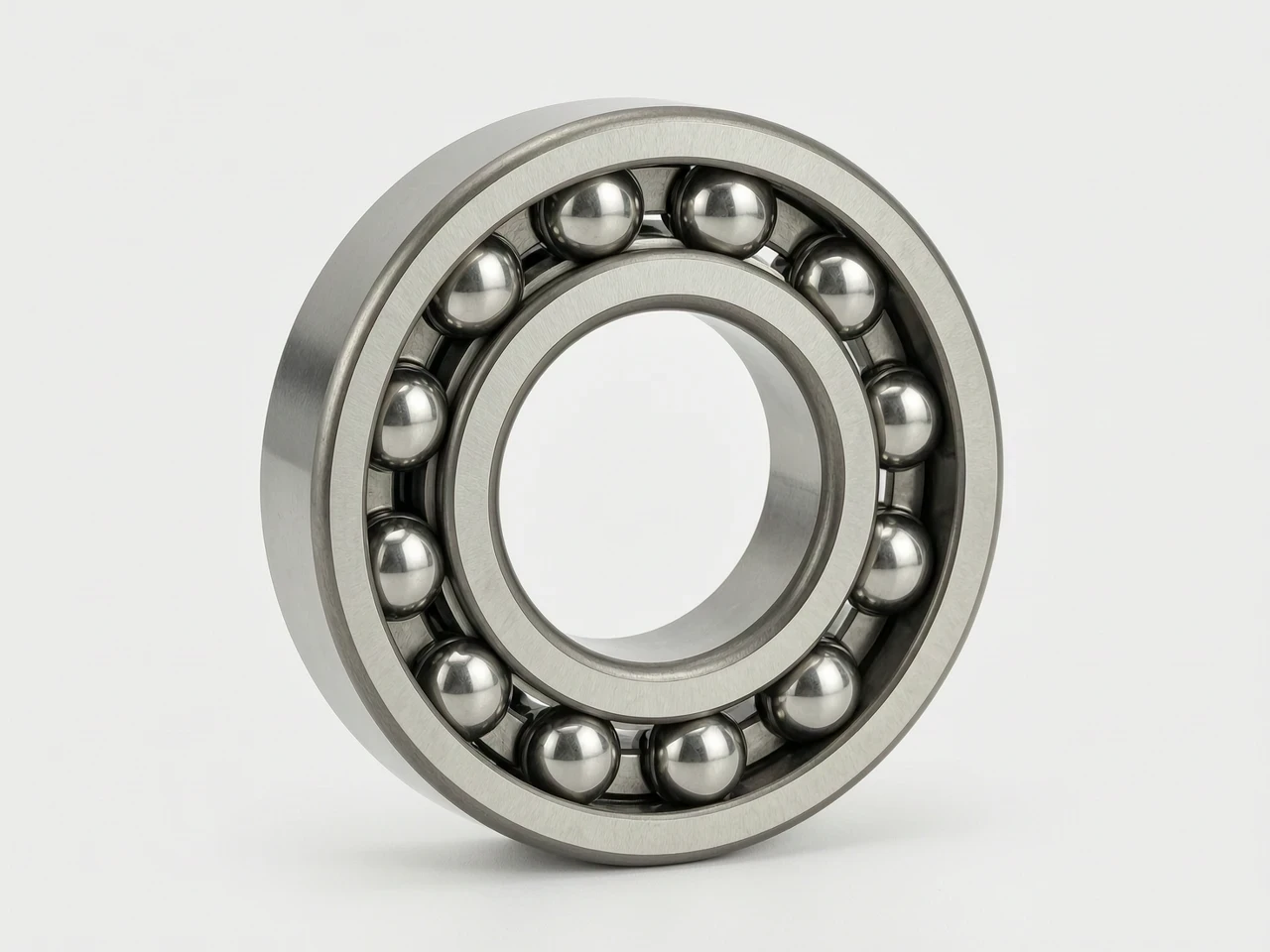
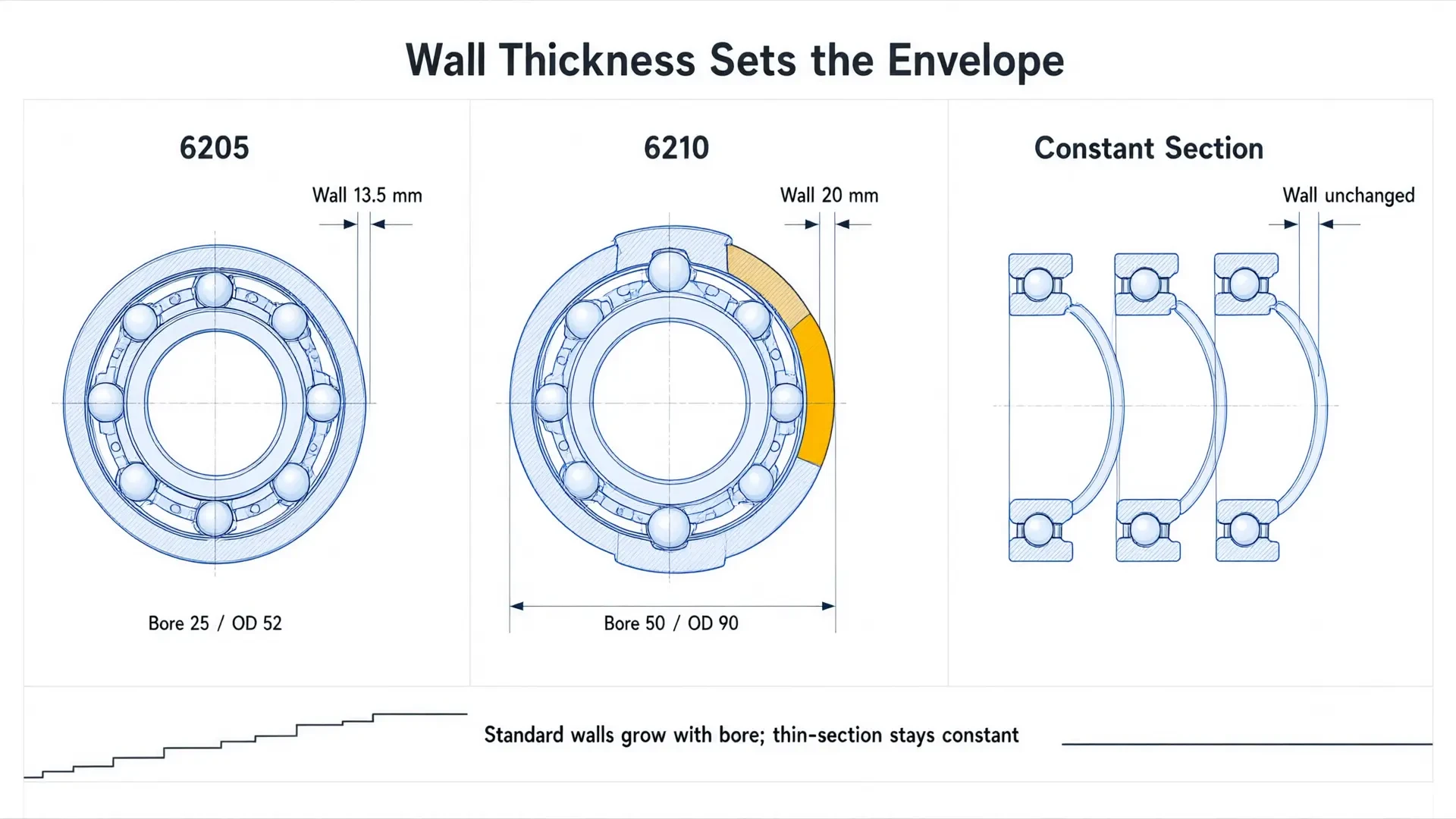
ISO 15 specifies the boundary dimensions of standard deep-groove ball bearings. The rings' radial wall thickness is not constant; it generally increases with the bore size. Consider the 62 series: a 6205 has a 25 mm bore, a 52 mm outside diameter, and a 15 mm width, giving a radial wall thickness of 13.5 mm per side. A 6210 has a 50 mm bore, a 90 mm outside diameter, and a 20 mm width, with a wall thickness of 20 mm. When the bore doubles, the wall thickness grows substantially, and the bearing becomes wider as well.
That larger cross-section can support greater load capacity: rolling-element size, raceway geometry, and ring stiffness all increase, contributing to a higher dynamic load rating. The trade-off is a larger radial footprint. For a 50 mm bore, the machine must accommodate a 90 mm outside diameter. When space is a hard constraint, a standard cross-section may no longer be suitable.
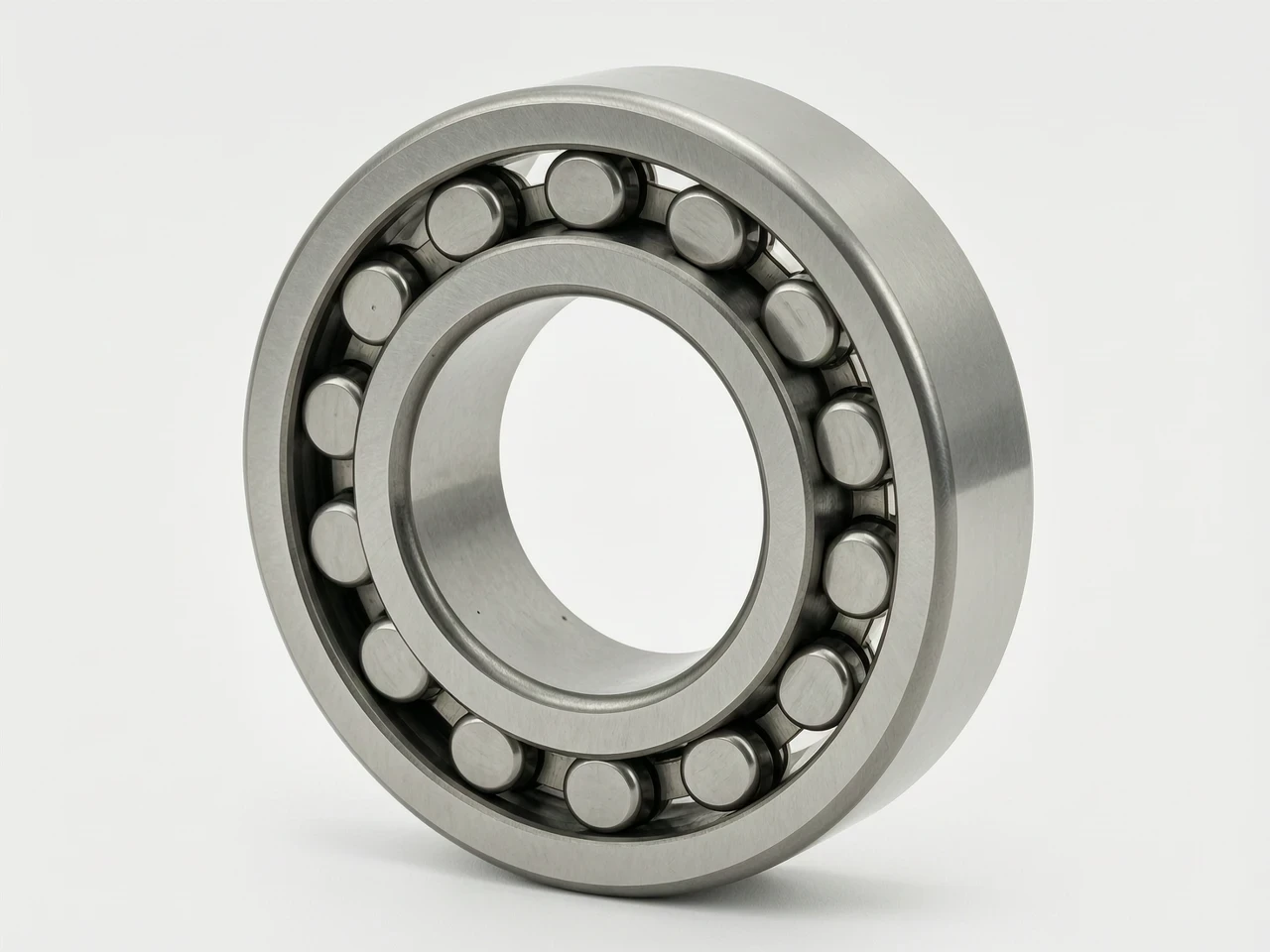
Thin-section bearings address this constraint. Deep-groove ball bearings in the 68 and 69 series have smaller cross-sections than standard series. Constant-section bearings maintain a consistent cross-section across a range of bore sizes, allowing a larger bore within a similar radial envelope. Depending on the design, this can accommodate a larger shaft or a smaller outside diameter. Hollow shafts, cable pass-throughs, and the clear aperture of an optical barrel can all benefit from this dimensional relationship.
The Weight and Inertia Benefit
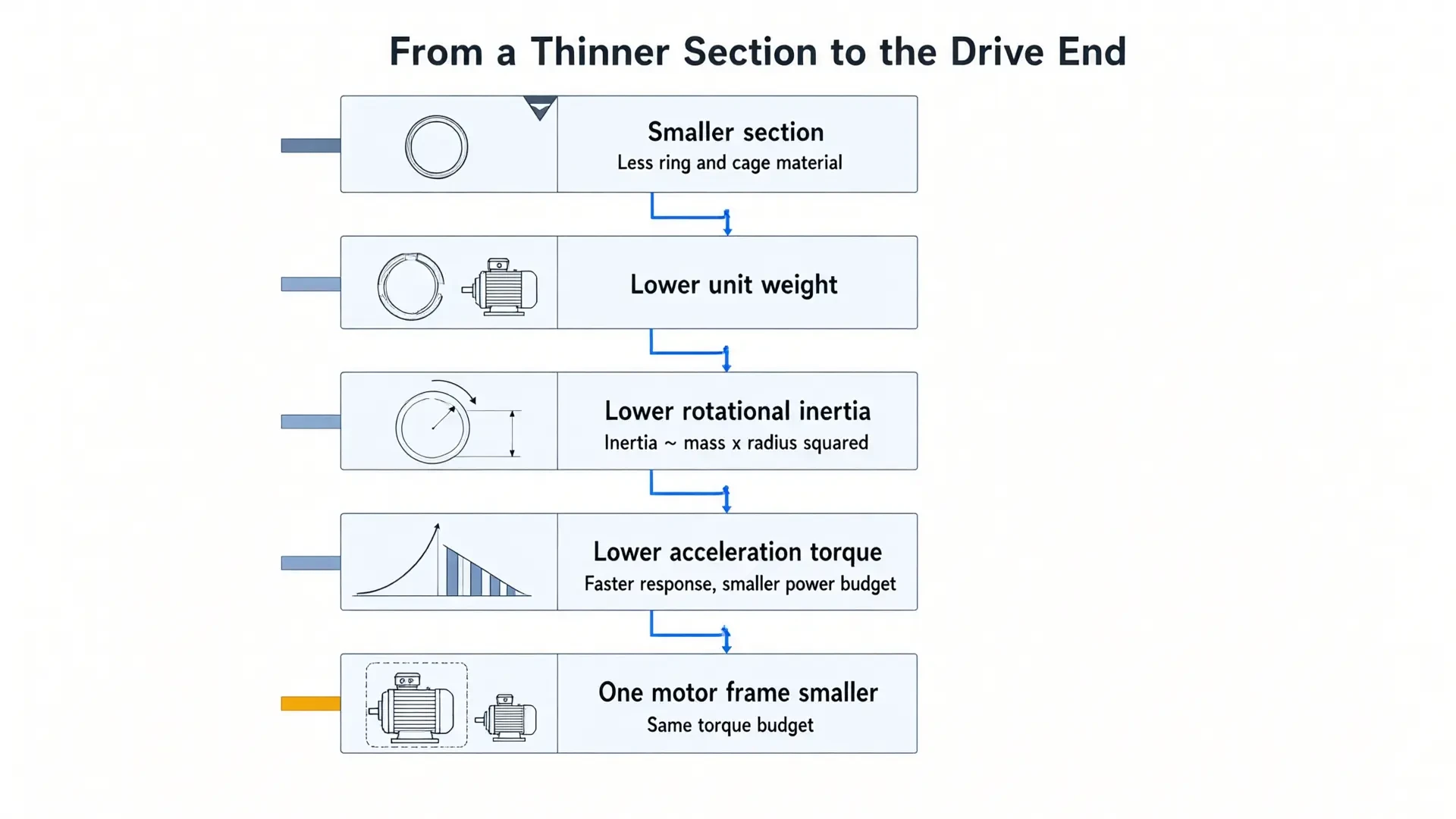
A smaller cross-section can reduce the material used in the rings and cage, lowering bearing weight. In joint modules, rotary tables, and robot end effectors that start and stop frequently, reduced mass may also help lower rotational inertia.
Rotational inertia depends on both mass and its distance from the axis of rotation. Because a bearing supports rotating components, its inertia may contribute to the drive motor's acceleration-torque requirements, affecting response time and motor sizing.
The bearing may represent only a small share of the rotating assembly's mass, but the distribution of that mass matters: material removed farther from the axis has a greater effect on inertia than the same mass removed closer to it. The potential benefit of moving to a thin-section bearing should therefore be evaluated in the complete machine's dynamic model, not inferred from weight alone.
Under the same torque budget, a lower-inertia shaft system can accelerate faster and may allow a smaller motor. This benefit will not be apparent from a bearing catalogue alone; it emerges from the dynamic analysis of the complete machine.
The Trade-Offs of a Thin Wall
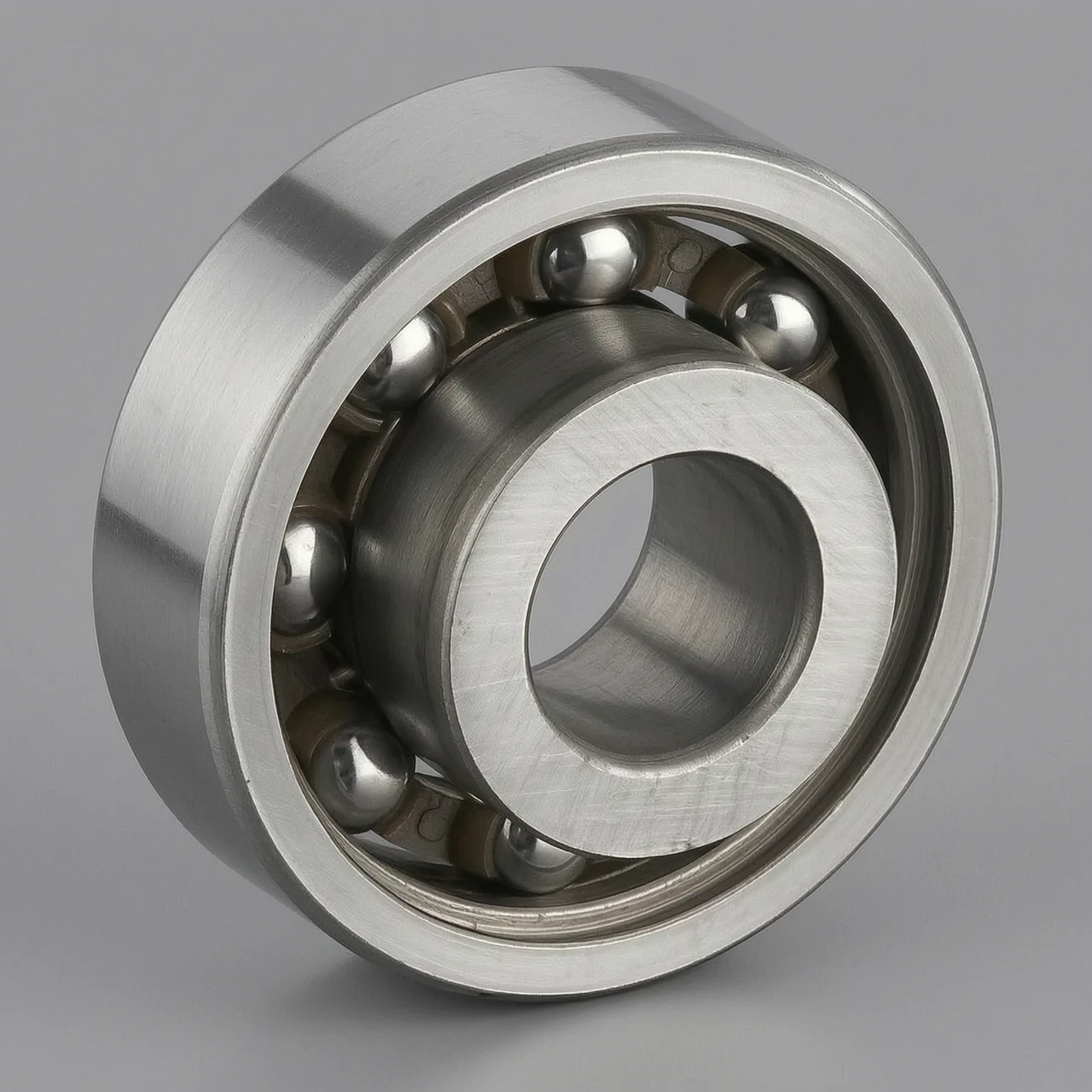
A thinner cross-section can reduce ring stiffness and increase raceway deflection under load. As a result, load capacity and rigidity may be lower than those of a standard bearing with the same bore. For high loads, shock conditions, or long service-life requirements, a thin-section option may not pass the initial life calculation.
Installation sensitivity can also increase. Thin rings require careful control of housing roundness, shaft alignment, and mating-surface flatness. Uneven force during press-fitting can distort the rings and affect raceway performance, potentially causing premature noise or temperature rise. Clearance and preload also require careful adjustment; deviations can alter bearing contact conditions and affect load distribution.
Housing distortion is one possible source of problems. A thin ring may conform to an out-of-tolerance seat, transferring the housing's ovality to the raceway. The resulting issue may be attributed to the bearing even though it originated in the seat geometry or clamping sequence.
A Practical Selection Sequence
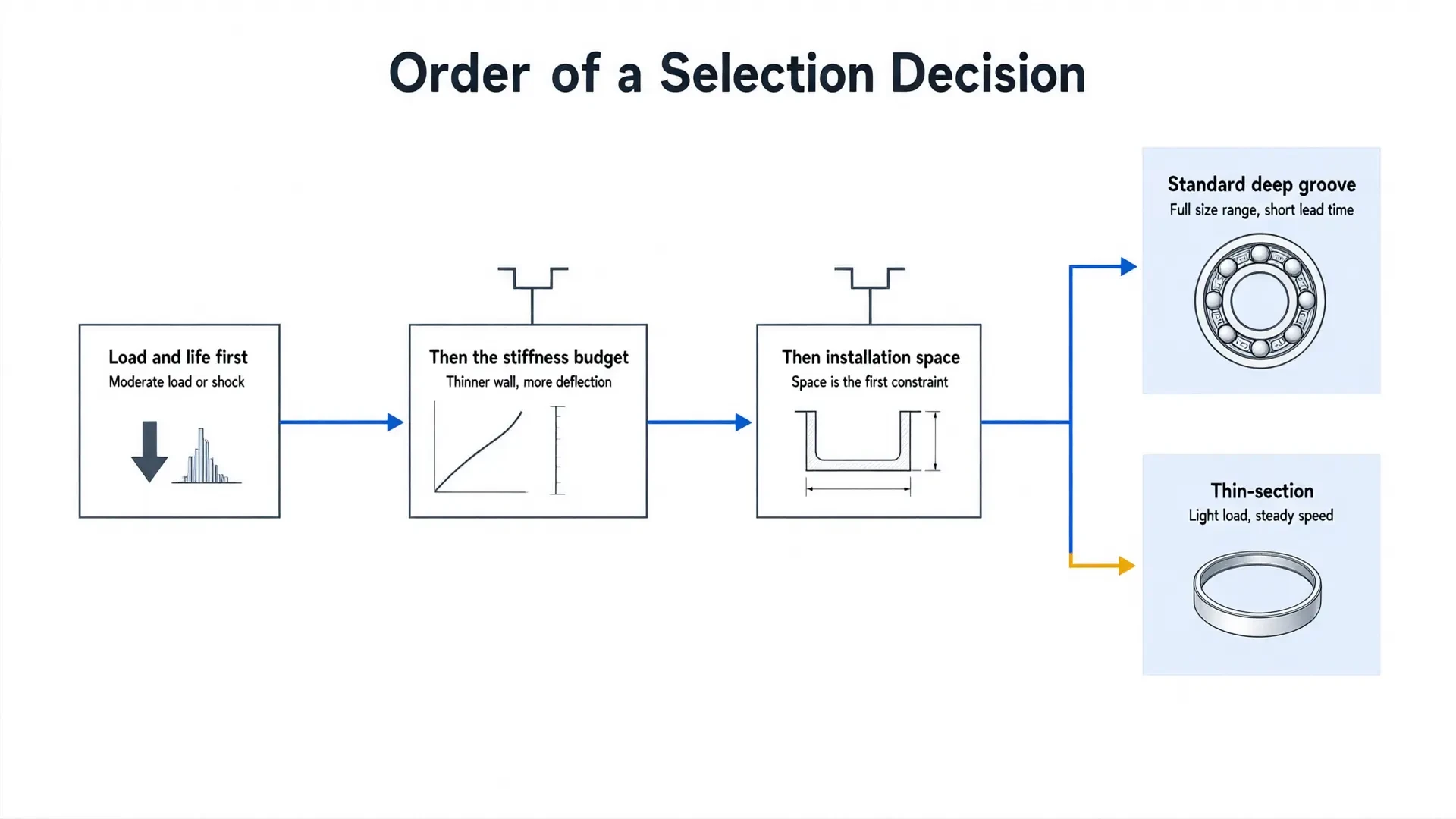
A sound selection process starts with load and service-life calculations, then assesses stiffness requirements, and finally considers available space. For equipment subject to moderate or high loads, shock, or long maintenance intervals, standard deep-groove ball bearings may remain the more economical option. Thin-section bearings are most suitable when space is the primary constraint, loads are light, and operating conditions are stable.
Comparing both options under the same duty cycle is the most reliable approach. A thin-section bearing that meets service-life requirements at the actual load spectrum may offer advantages in envelope and inertia. If it does not meet those requirements, preload or fit adjustments cannot compensate for an unsuitable design.
Quality and Supply Considerations
At the purchasing stage, two key risks are dimensional conformity to the drawing and consistency between batches. We address these through quality controls: boundary dimensions are checked against ISO 15, tolerances against ISO 492, and precision grades against ABEC/ANSI Std 20. Shipments undergo either 100% inspection or AQL 1.5 sampling under an ISO 9001:2015 quality-management system.
We hold more than 500,000 standard deep-groove ball bearings in stock for same-day dispatch. Non-standard designs can be produced to drawing, with a minimum order quantity of 100 pieces and a lead time of 15 to 45 days.
Conclusion
A bearing's wall thickness can affect assembly, machine dynamics, and long-term performance. Sharing operating conditions, load spectra, and mounting drawings with your supplier can help identify potential issues earlier than comparing catalogue entries alone.
If you need to verify whether a bearing will fit the available space, send us your drawing. We'll assess suitable options against the actual operating conditions.